Illustrative Circle example
A club across generations.
Fifty years of one amateur football club, kept by the people who played for it rather than by whoever ends up with the loft. The oldest member is eighty-one and the youngest is fifteen.
This is a fictional story
The club is older than everyone in it.
Founded in 1952, two pitches and a breeze-block clubhouse, still playing on the same municipal ground. Nothing about it has ever been written down in one place, because a club does not have an archivist, it has whoever happens to still be here.
The history was in a cupboard behind the bar, in the frames on the wall, and in four lofts belonging to men in their seventies. Two of those four have died since 2020 and one loft was cleared by a house clearance firm.
What goes first is never the pictures. It is the names of the people in them.

Six members, sixty-six years between the oldest and the youngest.
Ken owns the Circle because Ken opened it. Two of the six can only look, listen and comment, and one of those two is the most important contributor on this page, because what Dennis adds he adds out loud.
KenOwner
Club secretary since 1998.
Opened the Circle because the cupboard behind the bar had started to smell of damp and nobody could say what was in it.
MarieContributor
Runs the bar on match days.
Took a picture of every framed print in the clubhouse before anyone took them off the wall, which turned out to be the single most useful thing anybody did.
DennisContributor
Played 1971 to 1979.
Seventy-eight, and the only person alive who can name the whole 1974 side. Has recorded nineteen stories and uploaded nothing.
AishaContributor
Coaches the under-sixteens.
Adds the present day, and is the reason anybody under twenty has ever opened it.
JoeViewer
Fifteen, plays at the back.
Found his own surname on a 1974 team sheet and had not known his grandfather played.
PatViewer
Daughter of a founder, 81.
Has the only picture of the ground before the stand was built, and cannot work out how to send it, so Marie went round with a camera.
The season they still talk about
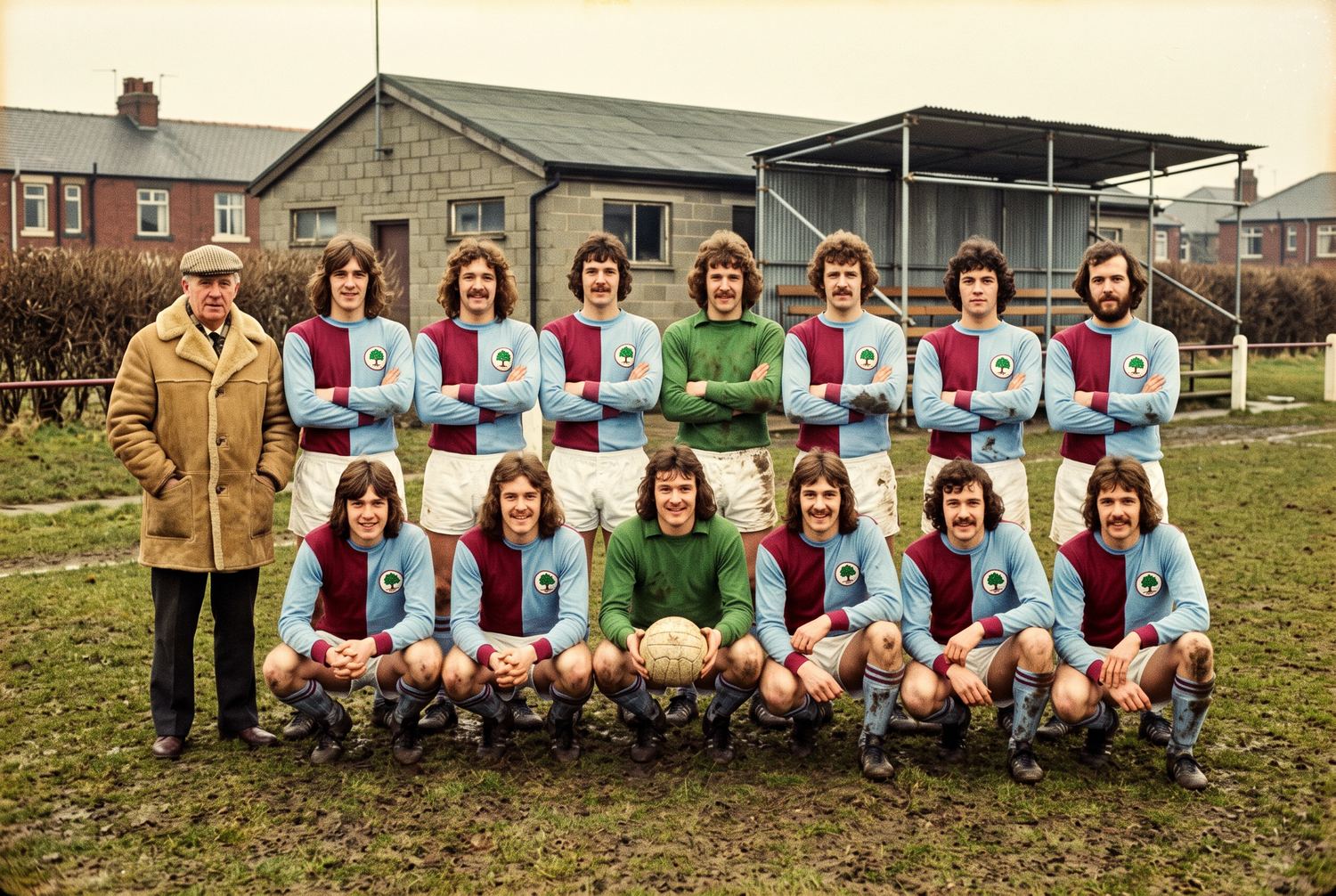
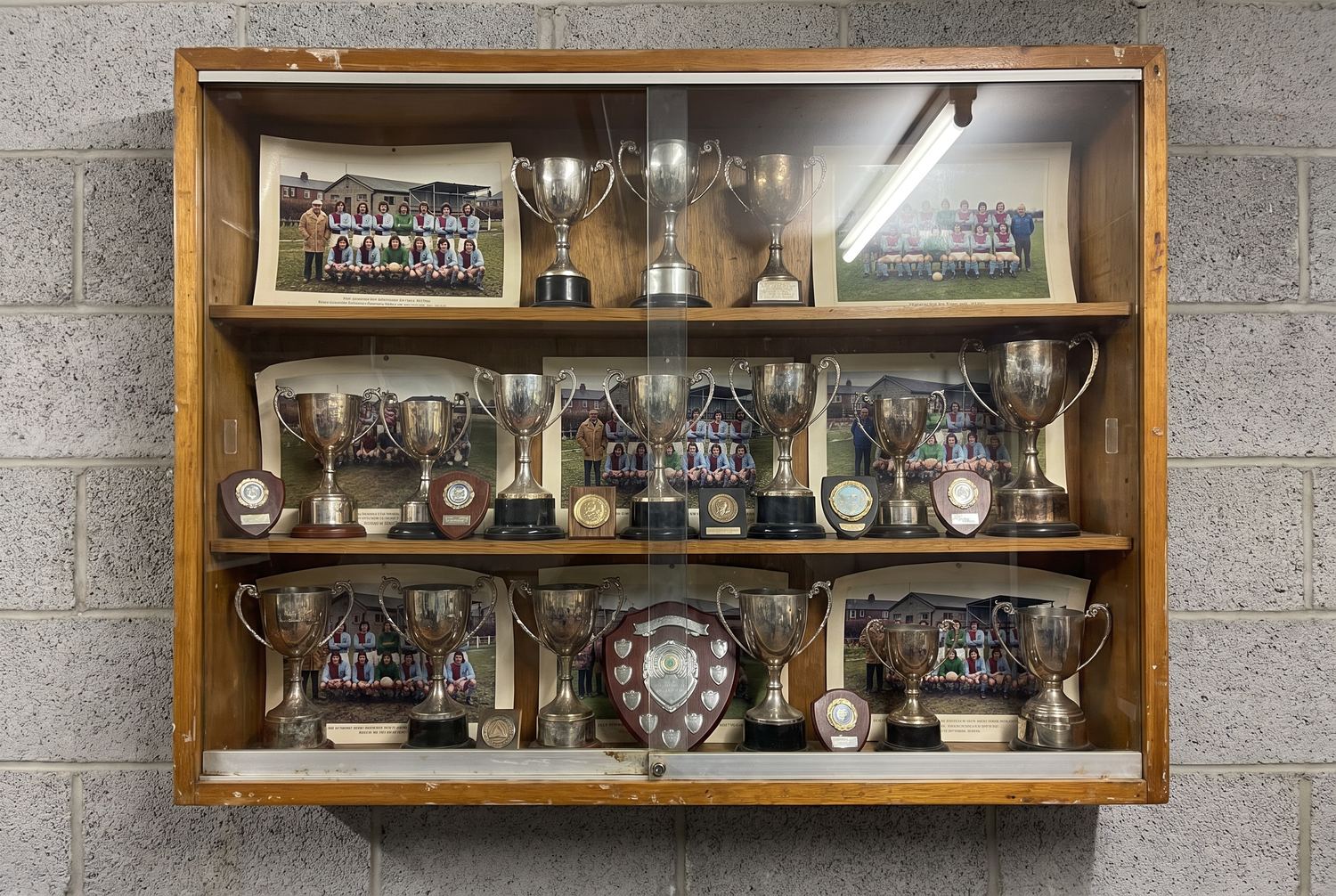
Fourteen men and a manager in a sheepskin coat. The print that survived is the one that hung in the bar for thirty years, in the sun, above a radiator.
Dennis named all fifteen from memory in a recording that runs eleven minutes and goes off the subject four times. Two of the names were wrong and were corrected in the comments by somebody’s son.
The one nobody kept
The decade with the least material in it, because everybody assumed somebody else had it and film had stopped feeling precious.
Four photos exist of the entire 1998 season. Three are Marie’s, taken on a compact camera, and one is a newspaper cutting somebody found in a drawer.
The same badge, the same mud

The under-sixteens, on the same pitch, in front of the same clubhouse, in a kit that has changed shape four times and colour never.
Aisha adds these the week they are taken. It is the first era of the club whose record is being made rather than recovered.
Thirty years above a radiator.
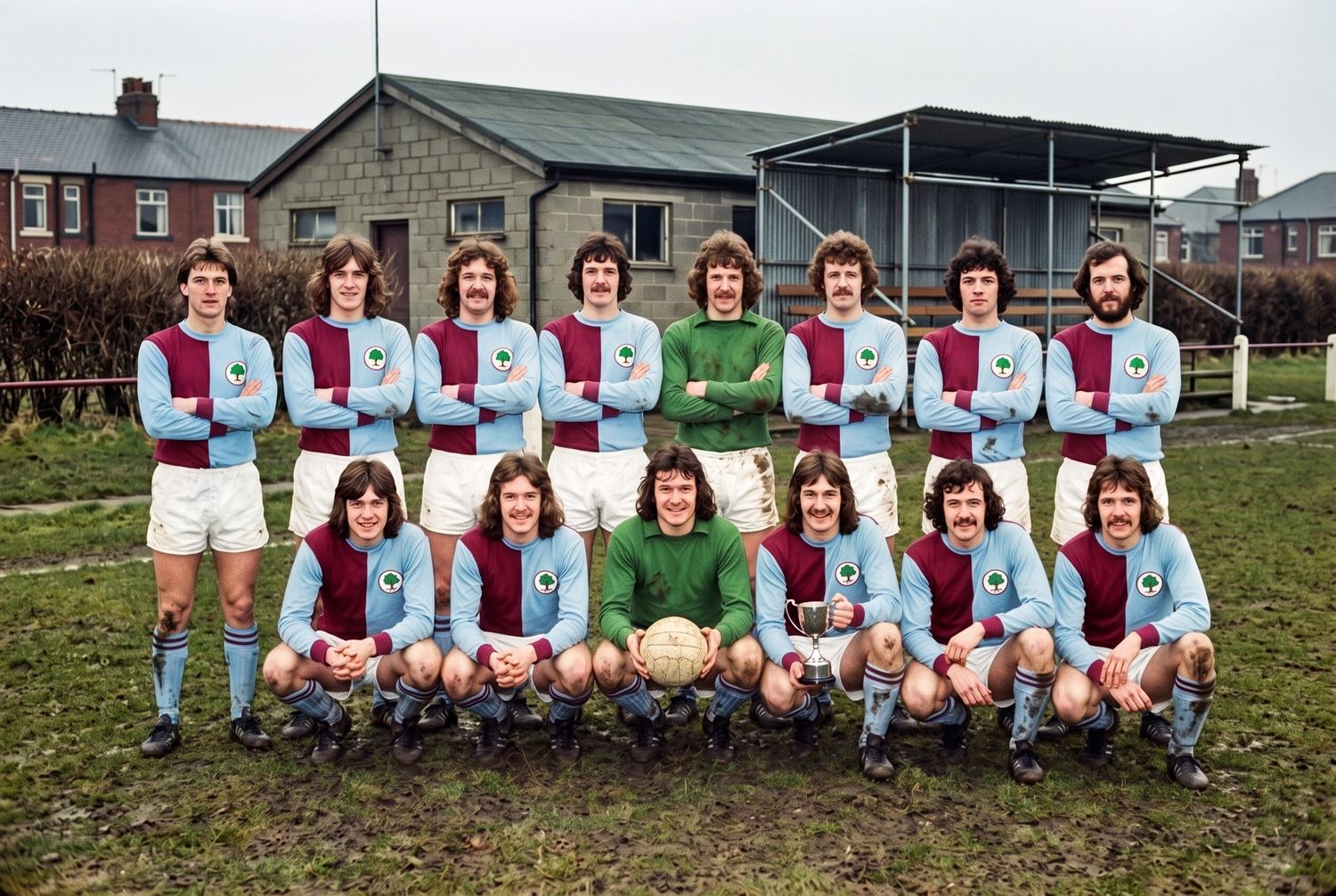
The 1974 print hung in the bar from 1975 until the wall was replastered. Drag the handle: the version on the left is what came off the wall, and it is still in the Circle exactly like that.
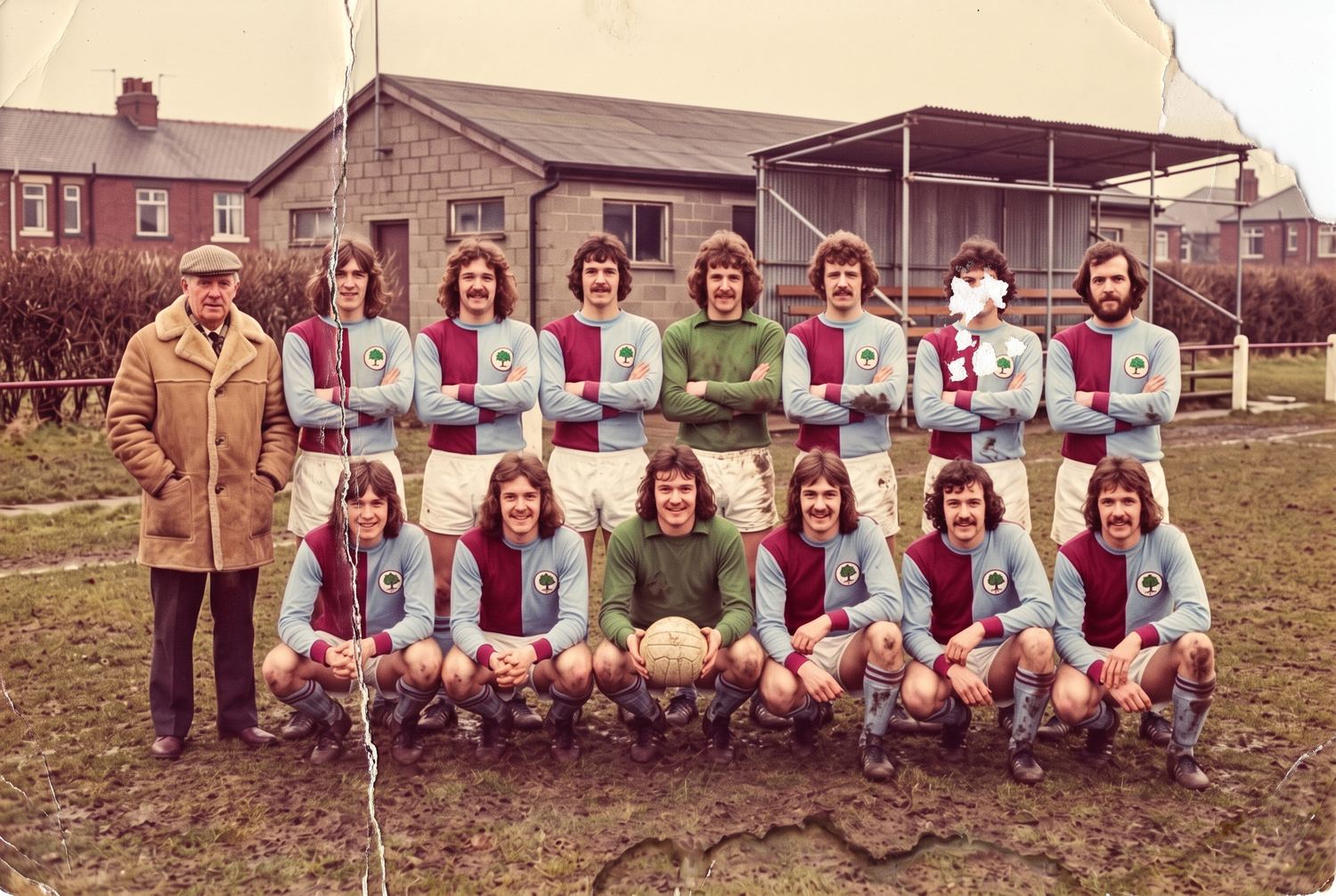
Both frames were made for this site and neither is a product result. What the sequence shows is the shape of the job: the damaged print stays in the Circle, the mended version is kept identified as created, and the two are linked so nobody can mistake one for the other later.
Nobody here needed a Likeness. The faces in this print are faded rather than lost, and a Likeness is for the case where a face has actually gone. The club has not created one for anybody, living or dead.What a Likeness is for
The clubhouse, before it gets knocked down.
The council has been talking about the site for four years. Marie took four pictures of the inside of the bar on a Sunday morning, from the four corners, and those four are a scene you can turn around in.
Created interpretation
Built from these four, all taken the same morning
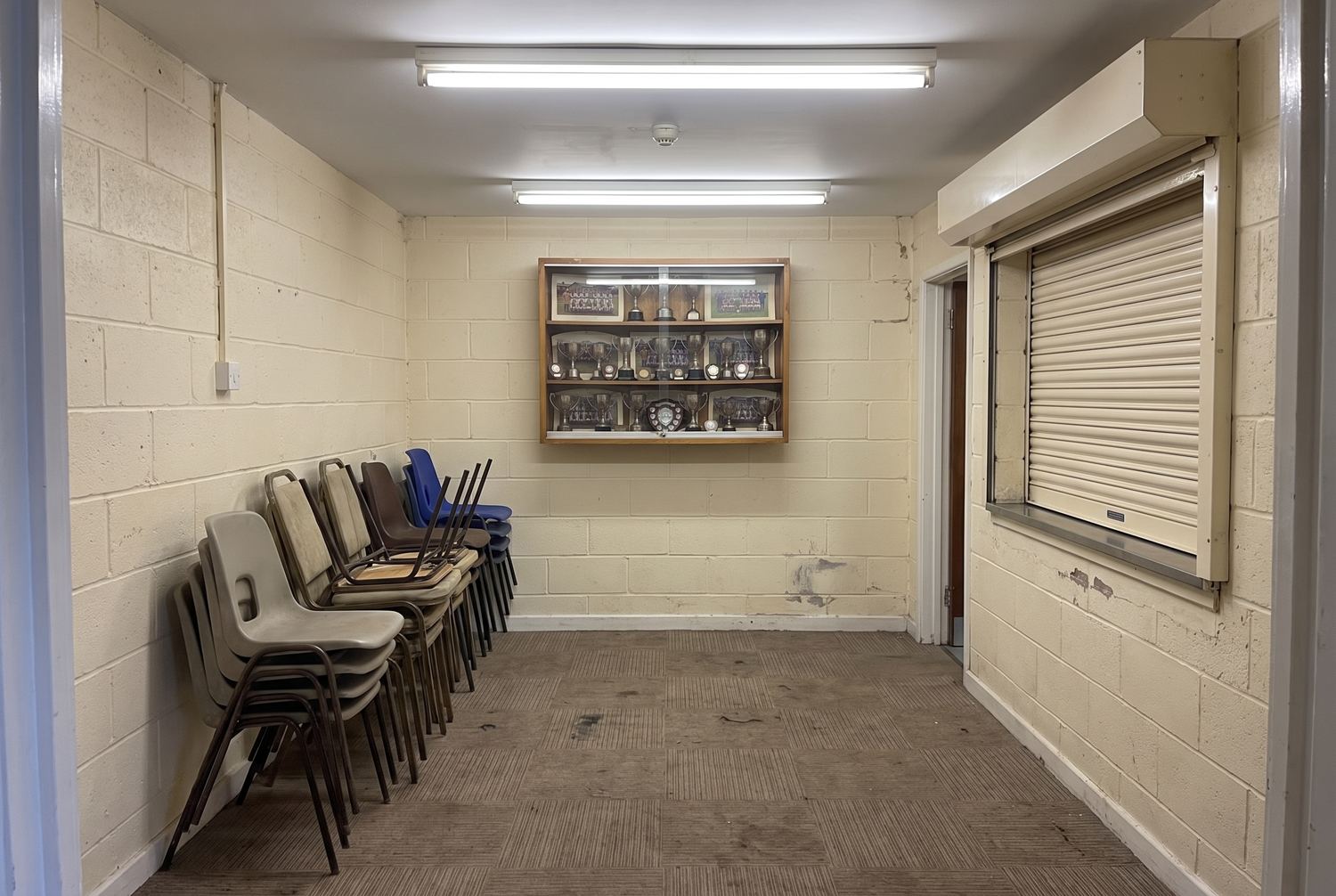
From just inside the door 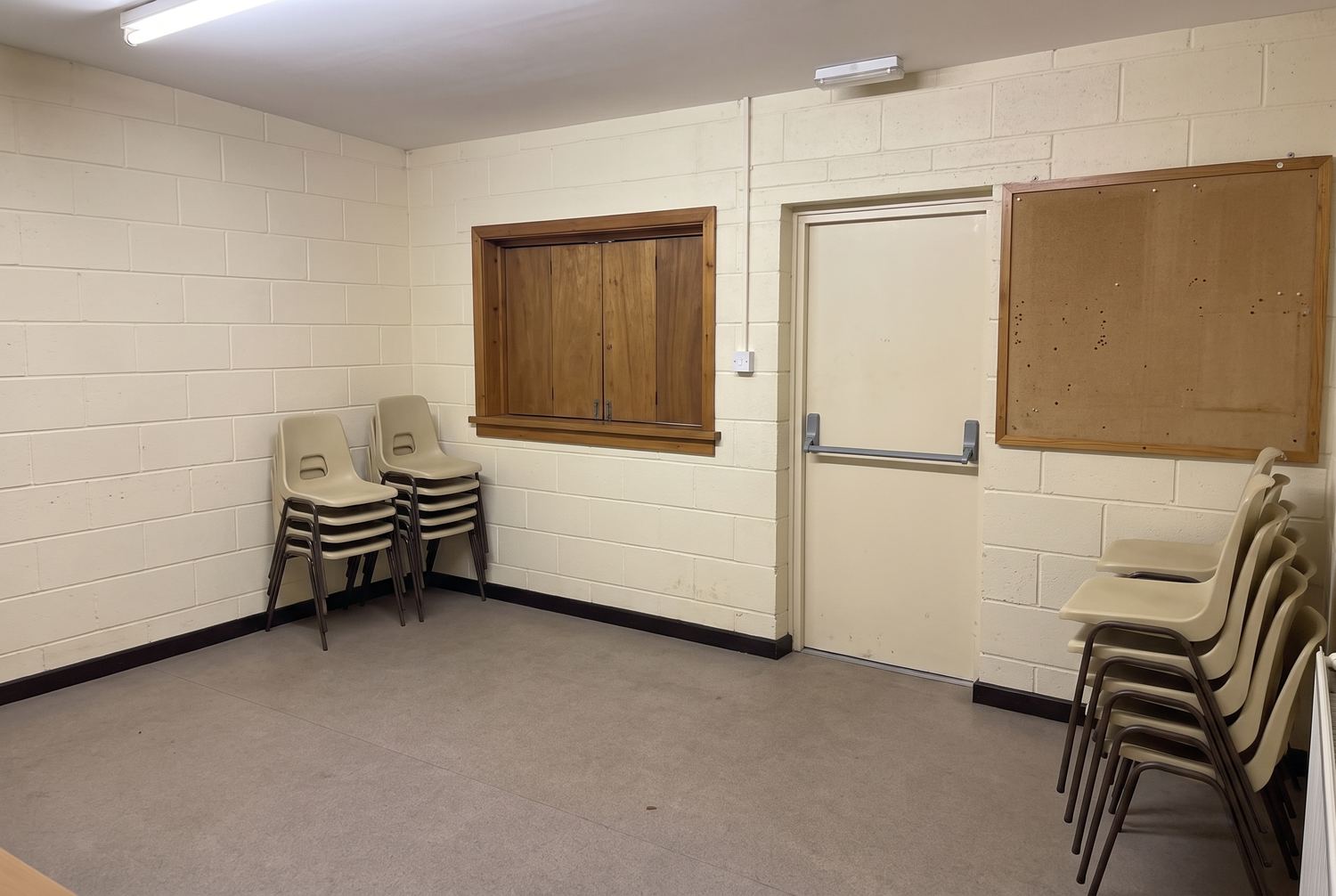
From the far corner, towards the bar 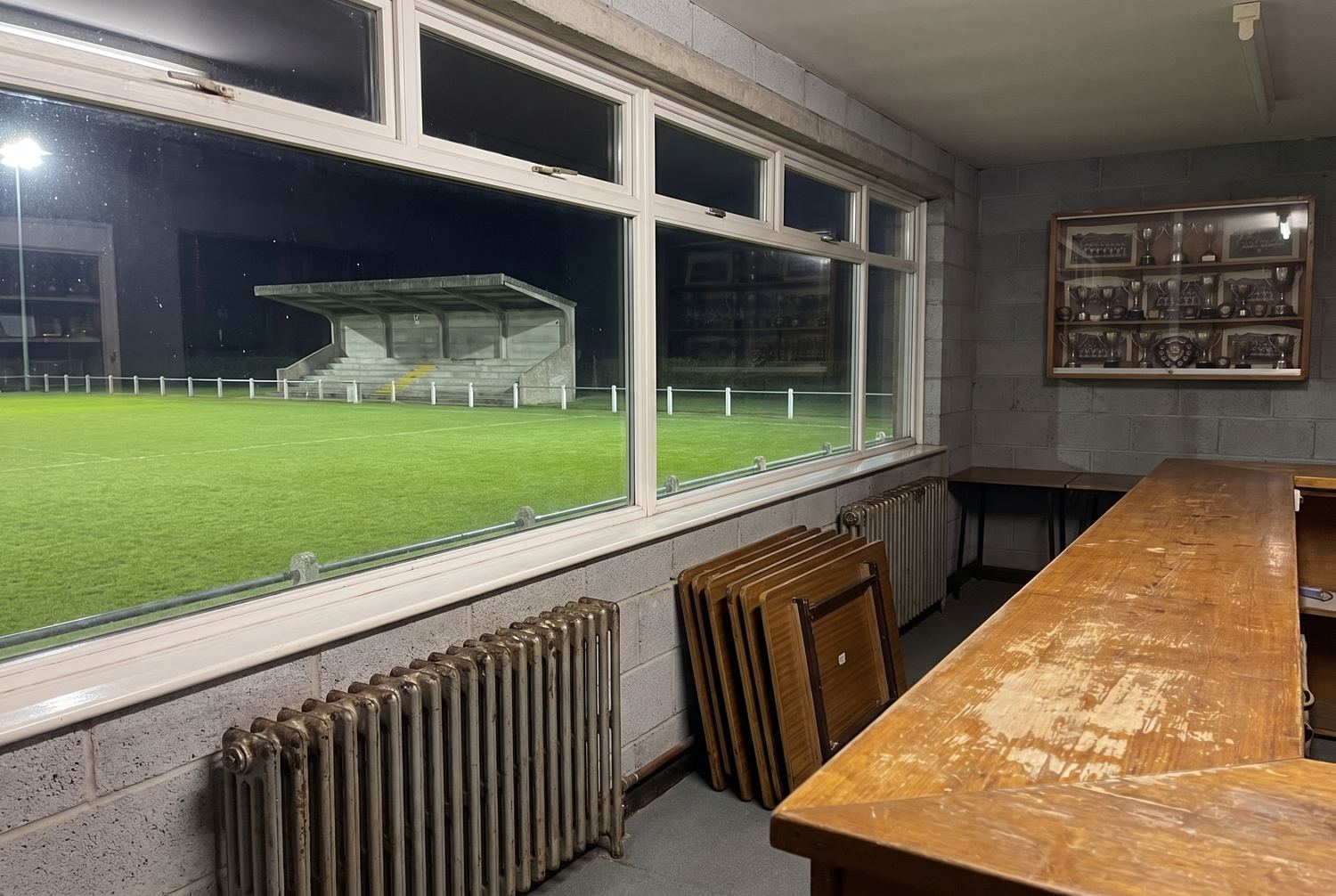
From the bar, out to the pitch 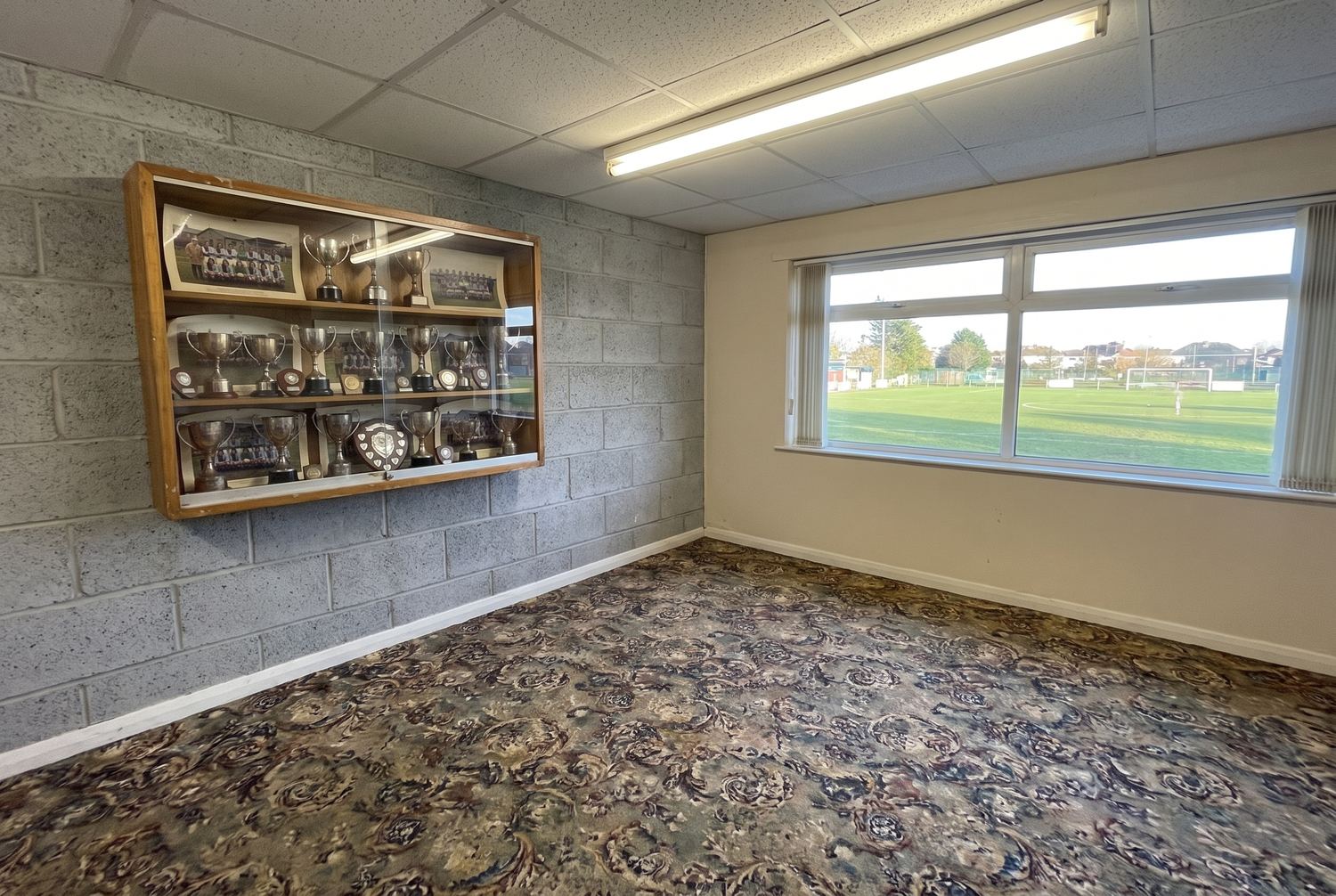
Back across the room
All four stay in the Circle as photos. The scene is a fifth thing, kept alongside them, labelled as created, and never presented as one of them.
Joe, fifteen, and a team sheet from 1974.
This is the part that decides whether a club archive is alive or is a loft with a website in front of it.
Aisha put the under-sixteens squad photo in and told them to go and look at the old ones. Joe found his own surname on the 1974 team sheet, asked at home, and discovered that the man third from the left in the back row is his grandfather, who has never mentioned it.
Dennis recorded four minutes about him that afternoon. Joe’s grandfather has since been invited into the Circle, has listened to it twice, and has corrected one detail in a comment.
What made that possible was not storage. It was that the 1974 photo has names attached to the people in it, and that a fifteen-year-old had a reason to be in the same place as it.
Privacy and permission, in a Circle about a lot of people.
A club archive holds pictures of hundreds of people, most of whom are not members of the Circle and some of whom are children. That is a different problem from a family Circle and it is worth naming.
- The Circle is private and invitation-only. There is no public version of it, and a club archive that is genuinely meant to be public is a different job from this one.
- Present-day pictures of under-eighteens are in this Circle because their parents agreed with the club that they could be, which is a decision the club takes and records outside Cirluma. Cirluma does not market to under-eighteens and does not offer them accounts.
- Nobody has been given a Likeness. Consent is required before a recognisable person can have one, it can be withdrawn, and for a club photo of fourteen men in 1974 that consent is mostly not obtainable, which is the correct reason not to.
- Ken is the only owner. A club whose secretary changes every few years will eventually need ownership to move with the job, and moving it is not something the product does today.
Start the one you have been meaning to start.
Every club has a cupboard, and somebody in their seventies who can still name the 1974 side. The second of those is the one with a deadline on it.
Start with a free trial. Invitees do not need a subscription of their own.