About
The photo usually survives. The person who could explain it does not.
Cirluma exists because those two things almost never fail at the same time, and almost nobody plans for the gap between them.
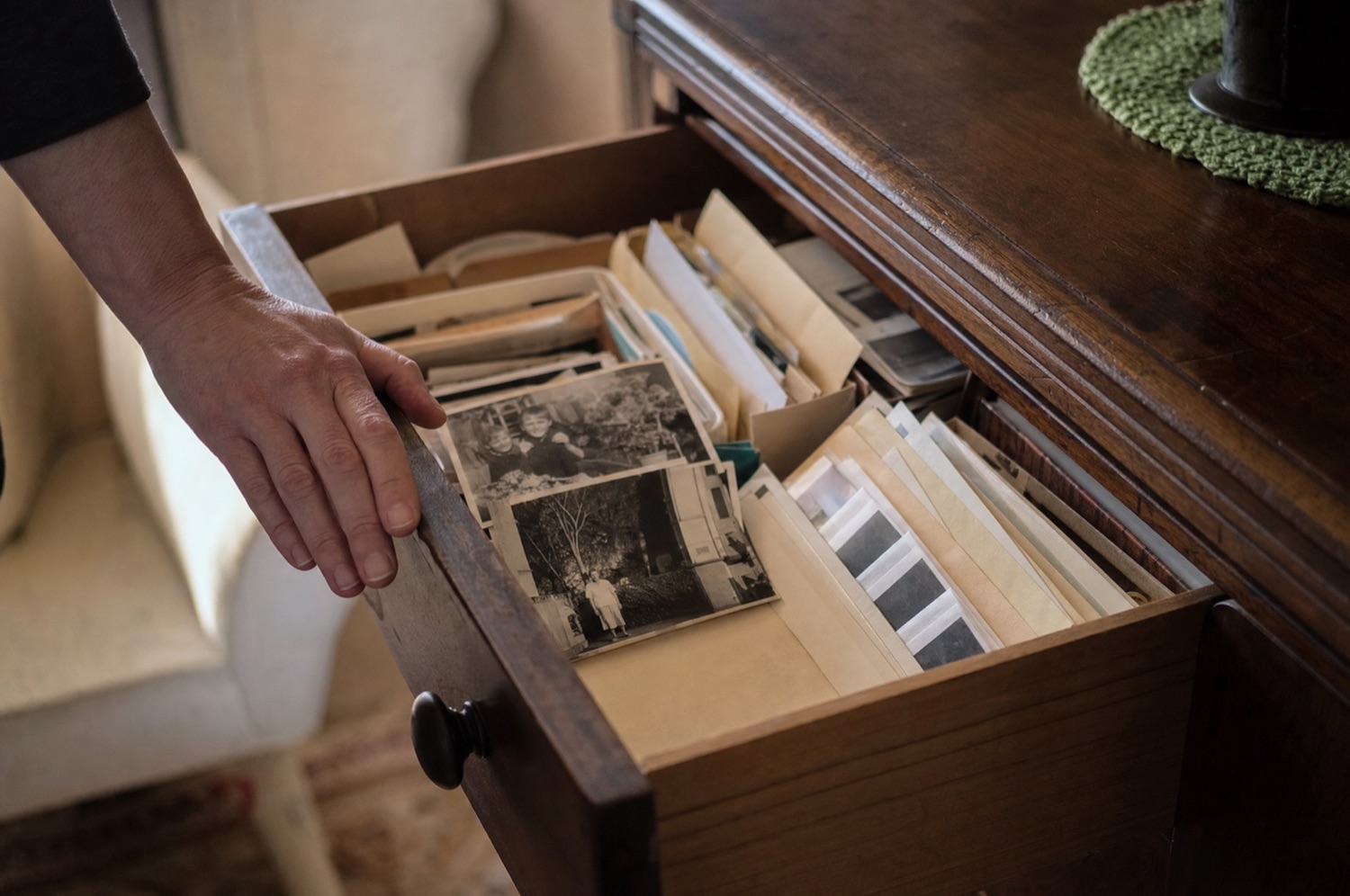
What goes missing is not the image.
Most families have a box, and most boxes have the same problem. The photos are fine. What has gone is everything that made them legible: who the woman on the left is, which summer it was, why everybody is laughing, what happened an hour later.
That knowledge is rarely written down, because at the time it was obvious. It lives in people, and it leaves with them. Usually it goes quietly, one recollection at a time, over years in which nobody noticed there was anything to save.
The tools we already have make this worse rather than better. Group chats are where the stories actually get told, and they are the worst possible place to keep them: unsearchable, unattributed, gone by next year. Cloud libraries are excellent at preserving files and almost useless at preserving what anybody knows about them.
So the photos survive, in ever higher resolution, and mean less every decade. Cirluma is an attempt to close that gap while there is still somebody who can.
A background in virtual reality, and two grandmothers.
Cirluma was started by Joe Brazão, who came to it from virtual reality rather than from picture-making, and from reading research into how familiar images and places are used in reminiscence work with people living with dementia.
Both his grandmothers were living with dementia in their last months. That is where the interest stopped being professional. The honest version of the motivation is not a mission statement: it is the recognition that one day he might get there too, and that the record somebody else would need does not build itself.
Cirluma makes no medical or therapeutic claim. It is not treatment and it is not a clinical tool. What it offers is preservation, participation and connection, which are worth having on their own terms.
Four commitments we would rather be held to.
The original is sacred
Whatever we create, the thing you gave us stays exactly as it was. A tool that improves your only copy of something is not a preservation tool.
A created version is never passed off as real
Everything Cirluma makes is labelled as made, and stays linked to its source. In fifty years somebody needs to be able to tell the difference.
Disagreement is data
When two people remember a day differently, both accounts stay, each credited. Flattening them into one official version would destroy the thing worth keeping.
Remembering is not a premium feature
Adding a name, a date or a story is not metered. We would rather charge for creation than tax participation.
What we are working on now.
Cirluma is early, and we would rather say so than imply otherwise. The Circle, its permissions, restoration and reframing are the parts we are building first, because they are the parts that make a shared record possible at all.
We are also recruiting the first real case studies, with the permission of everybody in them. If you are building something like this, we would like to document it with you.